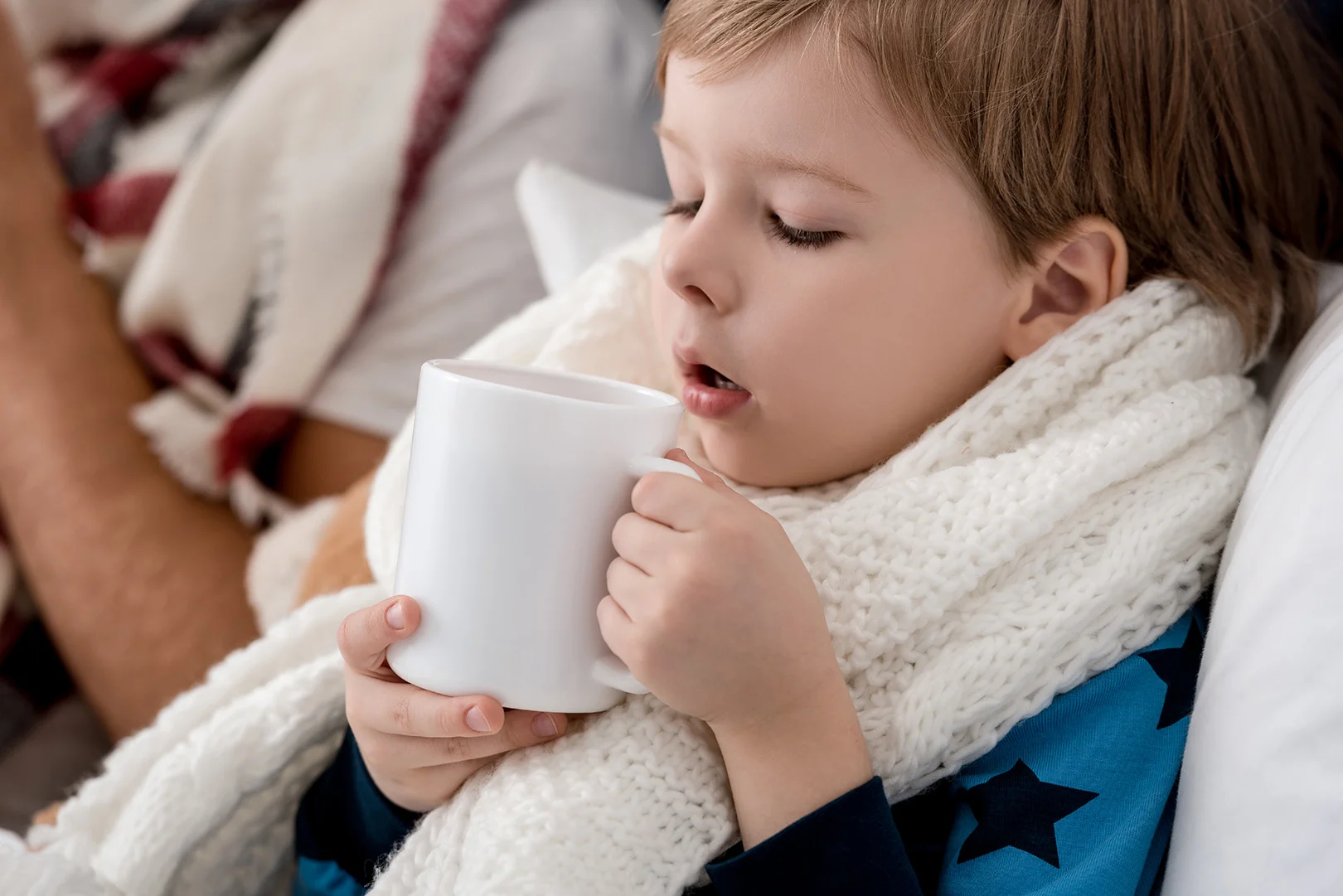
It often starts in the middle of the night. Your child wakes up crying, tugging at one ear, and nothing seems to help. Ear infections in children are one of the most common reasons Chicago families call their pediatrician, especially in fall and winter after a cold. Most ear infections get better quickly with the right care, and many do not need antibiotics at all. This guide explains how to spot an ear infection, what happens at the doctor’s office, how treatment works, and what you can do to prevent the next one.
At ASB Medical Clinic on Irving Park Road, Dr. Anna Banas has treated ear infections in babies, toddlers, and school-age kids from Portage Park, Dunning, Irving Park, and nearby neighborhoods since 1994. Here is what we tell parents every season.
Why Ear Infections Are So Common in Young Children
Children get far more ear infections than adults, and the reason is simple anatomy. Each ear has a small channel called the Eustachian tube that connects the middle ear to the back of the throat. In young children, this tube is shorter, narrower, and more level than in adults. When a cold causes swelling and mucus, the tube can block easily. Fluid then gets trapped behind the eardrum, and bacteria or viruses can grow there.
That is why ear infections so often follow a cold, the flu, or RSV. In Chicago, they tend to rise in late fall and peak in winter, when respiratory viruses spread in classrooms and daycare rooms. If your child just had a runny nose for a few days and now has ear pain, an ear infection is a likely cause.
Some children are more likely to get ear infections than others:
- Age. Babies and toddlers between 6 months and 3 years get them most often.
- Daycare. Group care means more colds, and more colds mean more ear infections.
- Secondhand smoke. Smoke irritates the lining of the nose and Eustachian tubes.
- Family history. Ear infections tend to run in families.
- Season. Chicago winters keep children indoors and close together, which spreads the viruses that lead to ear infections.
Types of Ear Infections: Middle Ear, Fluid, and Swimmer’s Ear
Not every ear problem is the same infection. Knowing the difference helps you understand what your pediatrician is looking for.
Middle ear infection (acute otitis media)
This is the classic ear infection. Fluid and germs build up behind the eardrum, causing pain, pressure, and often fever. It usually starts a few days into a cold. Both bacteria and viruses can cause it.
Fluid behind the eardrum (otitis media with effusion)
Sometimes fluid stays in the middle ear after an infection clears, or builds up without any infection at all. This fluid does not usually cause pain or fever. It can, however, make sounds seem muffled for a while. Most of the time it drains on its own within weeks to a few months. We check it at follow-up visits, especially if your child seems to have trouble hearing.
Swimmer’s ear (otitis externa)
Swimmer’s ear is an infection of the outer ear canal, not the middle ear. It is common in summer, when Chicago kids spend time at Lake Michigan beaches, park district pools, and swim lessons. Water stays in the ear canal and irritates the skin. Pain often gets worse when you gently pull on the outer ear. Swimmer’s ear is treated differently, usually with ear drops.
Signs of an Ear Infection in Babies, Toddlers, and Older Kids
Older children can usually tell you their ear hurts. Babies and toddlers cannot, so parents have to read the clues. According to the CDC’s guide to ear infections, common signs include:
- Ear pain
- Fever
- Fussiness or irritability
- Rubbing or tugging at an ear
- Trouble sleeping
In babies and toddlers, you may also notice:
- Crying more when lying down, because pressure in the ear increases
- Pulling away from the bottle or breast after a few sucks, because swallowing hurts
- Not responding to quiet sounds as usual
- Loss of balance or more clumsiness than normal
- Fluid or pus draining from the ear
Ear tugging alone does not always mean infection. Babies also pull their ears when teething, tired, or simply discovering their ears. Ear tugging together with fever, a recent cold, and poor sleep is a stronger sign that your child should be checked.
How Your Pediatrician Diagnoses an Ear Infection
The only way to know for sure is a quick ear exam. Your pediatrician asks about symptoms, then looks inside each ear with a small lighted tool called an otoscope. A healthy eardrum is thin, pearly gray, and moves a little. An infected eardrum often looks red, cloudy, and bulging, with fluid or pus behind it.
The exam takes only a minute and does not hurt, although a sore ear can feel tender. Small children may sit on a parent’s lap, with gentle hugging to keep the head still. If earwax blocks the view, the doctor may need to remove some of it first.
It helps to tell us:
- When the pain or fever started
- Whether your child had a cold, flu, or RSV recently
- Any medicines you have already given, and when
- How many ear infections your child has had in the past year
- Any allergies to antibiotics
Treatment: Antibiotics, Watchful Waiting, and Pain Relief
Many parents expect antibiotics for every ear infection. In reality, the body’s immune system can often clear a middle ear infection on its own. Using antibiotics only when they help protects your child from side effects like diarrhea and rash. It also helps prevent antibiotic resistance.
When antibiotics are needed
Antibiotics are usually started right away for severe infections, for very young babies, and for infections that last longer than 2 to 3 days. Your pediatrician also considers your child’s age, how high the fever is, how much pain your child has, and whether both ears are infected.
Watchful waiting
For a mild ear infection in an otherwise healthy child, your pediatrician may suggest watching for 2 to 3 days before starting antibiotics. You treat the pain at home, and you call back if your child is not getting better. Many children improve within that time and never need an antibiotic.
Delayed prescription
Sometimes we give you a prescription with instructions to wait 2 to 3 days before filling it. If your child gets better, you never fill it. If symptoms stay the same or get worse, you start the medicine without needing another visit.
If your child takes antibiotics
- Give every dose, at the right times, for the full number of days prescribed.
- Do not stop early, even if your child feels better after two days.
- Call us if your child develops a rash, hives, vomiting, or diarrhea that does not stop.
- Never give leftover antibiotics from another illness or another child.
Relieving pain at home
Pain relief helps your child rest, no matter which treatment plan you choose. The CDC advises giving only acetaminophen to children younger than 6 months. Children 6 months and older can have acetaminophen or ibuprofen. Always dose by your child’s current weight, and use the measuring tool that comes with the medicine. If you are not sure of the dose, call us before you give it.
A few more comfort tips:
- Offer extra fluids, and let your child rest.
- A warm, dry washcloth held over the ear can feel soothing.
- Keep your child’s head slightly raised during naps, if your child is old enough to sleep with a pillow safely.
- Never give aspirin to children, because it can cause a rare but serious illness called Reye’s syndrome.
- Do not put oils, garlic, or other home remedies in the ear. They can irritate the canal or make an exam harder.
- Do not use over-the-counter cough and cold medicines in children younger than 4 unless your pediatrician tells you to.
When to Call the Pediatrician About Ear Pain
Call ASB Medical Clinic at (773) 777-4767 if your child has:
- A fever of 102.2°F (39°C) or higher
- Pus, discharge, or fluid coming from the ear
- Symptoms that are getting worse
- Ear infection symptoms that last more than 2 to 3 days
- Trouble hearing, or not responding to sounds as usual
- No improvement after 2 to 3 days on antibiotics
Call right away if your baby is younger than 3 months and has a temperature of 100.4°F (38°C) or higher. Seek emergency care for a stiff neck, severe headache, swelling or redness behind the ear, a drooping face, or a child who is very sleepy and hard to wake. These signs are rare, but they need a doctor immediately.
Families who call early in the day can often get a same-day sick visit at our clinic. If the pain starts at night, pain medicine and a call to us in the morning are usually enough. For help deciding where to go after hours, read our guide on when to see your doctor versus urgent care in Chicago.
Repeated Ear Infections and Ear Tubes
Some children seem to get one ear infection after another all winter. Frequent infections are frustrating for families and can disrupt sleep, daycare, and school. They can also leave fluid behind the eardrum for months.
When fluid stays for a long time, it can muffle sound. For a toddler who is learning to talk, muffled hearing may affect speech and language. That is why we track ear infections over time and check hearing during routine well-child examinations.
If your child has many ear infections in a short time, or fluid stays for months and affects hearing, we may refer you to an ear, nose, and throat (ENT) specialist in Chicago. The specialist may discuss ear tubes. These are tiny tubes placed in the eardrum during a short procedure. They let air into the middle ear and help fluid drain. We coordinate records with the specialist, so you do not have to repeat your child’s history.
How to Prevent Ear Infections
You cannot prevent every ear infection, but you can lower your child’s risk. The CDC recommends these steps:
- Keep vaccines up to date. The pneumococcal vaccine protects against one of the most common bacteria behind middle ear infections. The yearly flu vaccine prevents flu, which often leads to ear infections. Our pediatric immunizations and vaccinations follow the recommended schedule.
- Wash hands often. Fewer colds mean fewer ear infections.
- Breastfeed if you can. Breastfeeding for the first 6 months, and continuing for at least 12 months, helps protect babies.
- Avoid smoke. Keep your home and car smoke-free, and avoid secondhand smoke.
- Dry ears after swimming. Tilt the head to drain water, and gently dry the outer ear with a towel.
A few more habits help too:
- Hold your baby in a more upright position during bottle feeding, and never prop the bottle.
- Keep sick siblings and visitors away from babies when you can.
- Prepare for flu and RSV season early. Our guide to flu and RSV season in Chicago explains how.
- Never put cotton swabs deep in the ear canal. They push wax deeper and can hurt the eardrum.
Ear Infections, Daycare, School, and Travel
Ear infections themselves are not contagious, but the colds that cause them are. Your child can usually return to daycare or school once they are fever-free for 24 hours without fever medicine and feel well enough to take part. A child on antibiotics does not need to stay home only because of the medicine.
Many Chicago families travel through O’Hare or Midway for the holidays. Flying with an ear infection can be uncomfortable when the plane climbs and descends. Swallowing helps the ears adjust, so nurse or bottle-feed babies, and give older kids water or a snack during takeoff and landing. If your child has an active ear infection and a trip coming up, call us before you fly.
How ASB Medical Clinic Helps With Ear Infections
ASB Medical Clinic is a private pediatric practice at 6033 Irving Park Rd, Chicago, IL 60634. Dr. Anna Banas has cared for Chicago children from birth through the teen years since 1994. For ear infections, families rely on us for:
- Same-day sick visits when you call early
- Careful ear exams and clear treatment plans
- Antibiotics only when they will help
- Follow-up checks for fluid and hearing
- Referrals and record sharing with ENT specialists when needed
- Visits in English, Polish, Spanish, and Russian
Our office hours are Monday through Friday, 9 AM to 5 PM, and two Saturdays each month, 9 AM to 5 PM. Call (773) 777-4767 or request an appointment online.
Frequently Asked Questions
How do I know if my baby has an ear infection?
Look for fussiness, ear tugging, trouble sleeping, fever, and pulling away from feeds, especially a few days after a cold. Only an ear exam can confirm it, so call us if you see these signs together.
Do all ear infections in children need antibiotics?
No. Many mild middle ear infections get better on their own within 2 to 3 days. Severe infections, very young babies, and infections that last longer usually need antibiotics.
Can an ear infection go away on its own?
Yes, often. The immune system can clear many ear infections. Your pediatrician may suggest watchful waiting with pain relief while you watch for improvement.
Are ear infections contagious?
The ear infection itself is not contagious. The cold or flu virus that led to it can spread to others, so handwashing still matters.
Can my child swim with an ear infection?
It depends on the type. Children with swimmer’s ear should usually keep the ear dry until it heals. For a middle ear infection, ask us at the visit.
When should my child see a specialist for ear infections?
We may refer your child to an ENT specialist if ear infections keep coming back, or if fluid stays behind the eardrum for months and affects hearing.
Ear infections in children are common, but they do not have to take over your family’s winter. With quick pain relief, the right treatment plan, and a few prevention habits, most children feel better within days. If your child has ear pain, our team is ready to help.
This article is for informational purposes only and does not constitute medical advice.